Close the tab if the manufacturer still owes you a stamp
If a recall is open, if a software campaign is waiting, or if a module needs a flash only the selling dealer can close on the brand’s system, stop. ClickMechanic will not tidy that up. A lower clutch number on a screen does not wipe a manufacturer job.
I start there because the site can look like a national workshop with a van for every street. It is a booking company. Companies House lists ClickMechanic Ltd in England and Wales under number 08297894. The registered office is 86-90 Paul Street, London EC2A 4NE. The founders are Andrew Jervis and Felix Kenton; they launched in 2012, after Jervis had been poking at quote distrust during work at Manchester. The diary slot goes to an independent mobile fitter or a local bay. That person does the work. There is no ClickMechanic polo on the driveway. The Auto Service Terms park diagnosis, parts, and workmanship with the fitter. A bad clutch job is a claim against that fitter, not against a branded reception with a manufacturer plaque on the wall.
Here is where I rewind. Ordinary mechanical work is a different story: a service due by the book, pads that are down to the metal, a cambelt interval, tyres, an MOT collected from a car that still moves. Type the plate and the postcode, see a number before anyone lifts the bonnet, and let the card sit on hold the way a hotel holds a night rather than handing cash over the fence. That part is useful. The limp part is treating the number as a factory promise.
A Shoreditch booking desk, not a bay with a lift
You are paying for a match and a hold, not for a ClickMechanic employee. Labour-time tables and parts data feed the quote, then the job is offered to nearby independents the company has already vetted. Someone has to have a free afternoon and a way to get the parts. They want roughly a day’s warning. A same-day or next-day gap appears only when the network happens to be quiet. Do not build a Monday around that. The marketing line is nationwide, most rural codes included, visits from 8am to 8pm every day. The phone desk on 020 3322 9988 is weekday office hours, nine to five. How fast a van actually arrives still hangs on how many fitters live near you.
Adyen takes the card on the mechanic’s behalf. The reserve usually lands about a day before they are due.
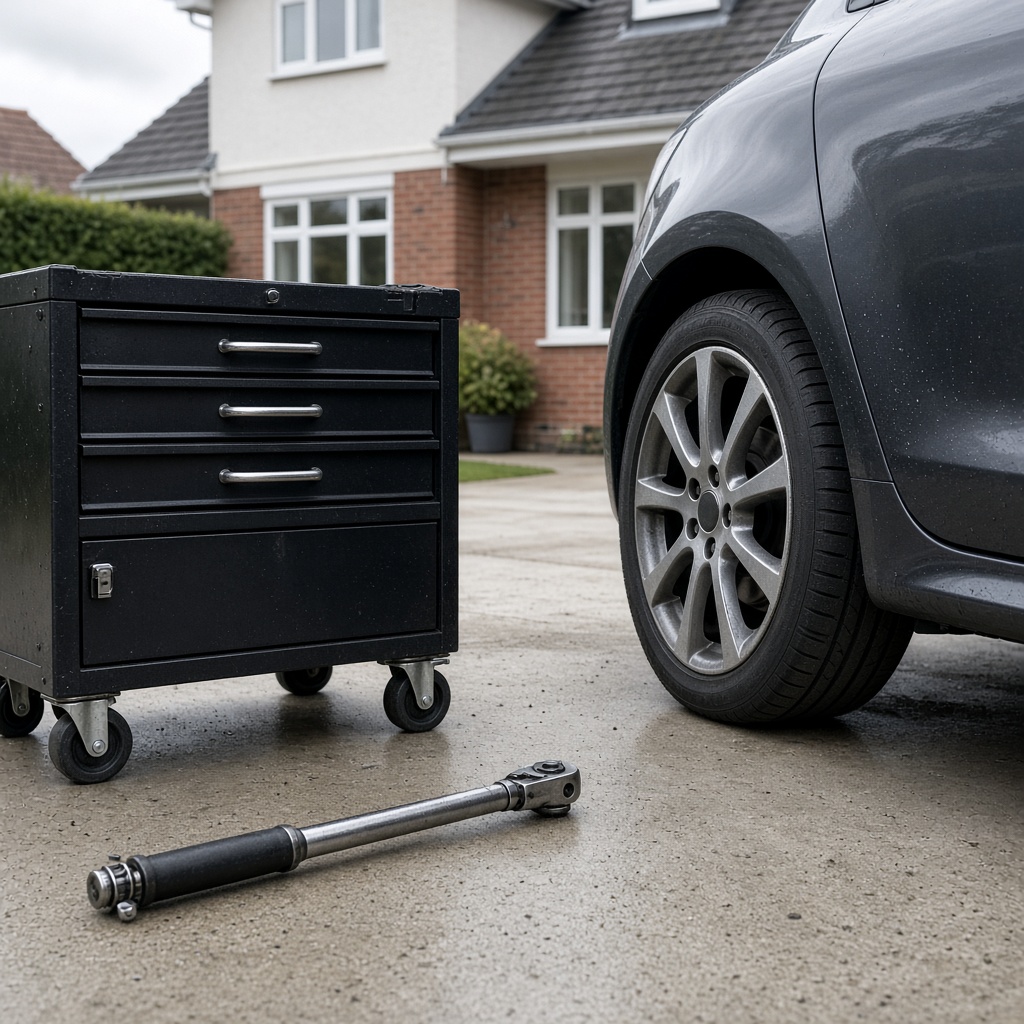
Pick a van on the drive, a garage that collects and brings the car back if it still drives, or a self-drop at a bay. A neighbour can hold the keys. When they arrive they confirm what was booked, finish it where they can, then walk you through the invoice. Extra work does not sneak on. If the first guess was wrong, they can bill a diagnostic visit and send a fresh figure for the real repair. You tap yes, or you walk away. The second job is still a decision, not a courtesy.
How the plate-and-postcode booking actually works
The path is fussy in a good way, as long as you name the job you actually need instead of a guess from a group chat. Do you really want a stranger taking your only car on a Tuesday morning while you sit in a meeting? Fair enough if you do. One-car houses book collection because a high-street waiting room is a faff. The car still has to roll for that route. If it will not move, the system leans toward a mobile fitter, and a garage may float a recovery charge you are allowed to refuse.
- Put in the registration and the postcode where the car will sit, then choose the job you actually need
- Set the on-screen figure next to a dealer invoice for the same labour description, not next to a forum guess
- Pick a van on the drive, garage collection and return, or a self-drop while the car still rolls
- Add your details, time windows, and a card; the hold usually appears about a day before they arrive
- Wait for the email that names the fitter, and the call before they turn up
- Approve any extra work in the account before anyone orders parts for that extra job
- Save the emailed invoice and the mileage; a later warranty argument will want both
When a van on the drive is enough, and when it is not
Pads, a service, tyres, a clutch with enough room to work — a van can handle those if the parts turn up. Anything that needs a ramp, a sealed bay, or a parts washer gets pointed at a garage. An MOT is a legal exam at an authorised station. Nobody prints a certificate on your tarmac. Public pages I could still read put a collected MOT alone at about ninety-eight pounds, or about nineteen pounds when it rides along with an interim, full, or major service that already includes collection. Only glue those together when both are actually due. A cheap add-on on a car you serviced last month is not a win.
A franchise still owns tools this marketplace does not copy: factory scan software, a parts desk that can ring the brand’s warranty team, and a ramp already living in the dealer system. Use those when the job is a software update, a manufacturer campaign, or a fault that only appears on an OEM laptop. Plain mechanical work with new matching parts is the ClickMechanic lane. High-voltage hybrid jobs, airbag modules, and some dual-clutch work sit in an ask-first bucket. Vetting is not a manufacturer electric-vehicle ticket. Ask about isolation training and the scan tool before anyone accepts the slot.
Run your registration, then park the figure next to a dealer invoice If the job is a known service, brakes, or a collection MOT on a car that still drives, get the ClickMechanic quote and keep a franchise figure beside it before the card hold lands.
Sold as fixed. The catch is the car’s condition.
The number holds for the job you picked, on a car assumed to be in ordinary shape, with the fitter buying new matching parts. You cannot book labour only and hand over pads you already own, or a used gearbox from a listing, because they have to stand behind materials as well as the fitting. Policies still call the quote an estimate if a bolt has seized, rust has eaten a thread, or the real fault is something else. Extra work needs your yes. That is cleaner than a high-street “we will know more on the ramp” shrug, if you actually read the second figure instead of waving the van on.
Move or cancel at least a full day before the earliest arrival and the rules say you owe nothing. Inside that day, a late fee can reach twenty pounds. After the fitter has left, it can reach forty. If they have already started, you can be billed for time spent, parts already in the car, and the time to put it back, with a floor around nine-tenths of an hour at rates the current notes put between about thirty-four pounds and about seventy-five pounds. Cancel inside the account or the resolution centre so the clock is stamped. A spoken cancel is not a record. If the hold hangs after you cancel, take the booking number to support instead of arguing in a text thread.
- Free change: shift or drop the slot at least a full day before the earliest arrival
- Late change: up to twenty pounds once you are inside that day
- Already travelling: up to forty pounds if they have left
- Work underway: time spent, parts already fitted, and time to put the car back, with a floor around nine-tenths of an hour
- Walk past the marketplace: open recall, software campaign, your own parts, a write-off you hoped someone would glance at, or a hard-shoulder rescue this is not
- Also walk past: a lease or finance deal that names the dealer network for every stamp, unless you enjoy that argument later
> Use ClickMechanic when you already know the mechanical job and you want a price before the bonnet goes up. Leave dealer campaigns, software flashes, and stamps only the brand’s own desks can issue with those desks. > > — Sophie Winters
Twelve months of cover sit with the person who turned the spanner
The Auto Service Warranty Requirements tell every fitter to stand behind faulty parts and labour for twelve months or twelve thousand miles, whichever comes first. Inspections and diagnostics sit outside that rule; they are a snapshot of the car that morning. Parts you supplied sit outside the required cover. Hard use, skipped manufacturer servicing, and a claim where the fitter is not allowed to look at the fault can all thin the case. Some fitters add their own steps. Keep the booking record and the mileage on the invoice.
And that is the bit people skip. They treat the logo as the warrantor.
Who should book, and who should walk past
Book if you run a conventional petrol or diesel car, you already know the job, and you want it done at home or collected. It fits people who refuse the plastic chair in reception, houses with one car, and buyers who want someone to look at a used car at the seller’s kerb instead of relying on a handshake. It also fits anyone tired of open-ended estimates, as long as a second approval still feels acceptable. I am not sure it fits anyone who wants the same face every year. A bay you already trust can still beat a marketplace on continuity.
Walk past if a recall is live or a software campaign is waiting. Walk past a labour-only job on an engine you found online. Walk past a Category S or N write-off; those inspections are refused. Walk past if you insist on supplying your own parts. A main dealer is still the sensible counter for campaigns, coding, and goodwill. Pre-purchase look-overs exist as their own booking and start around eighty pounds for a basic kerbside check. That check is not an engineer’s structural survey, and it does not reopen a write-off.
What I could check on 27 September 2026, and what stayed unpublished
On 27 September 2026 I reread the public booking pages, the Auto Service Terms, and the cancellation notes. Opening hours, the card-hold description, the free-change window of a full day, and the twelve-month or twelve-thousand-mile cover requirement were still written as I have them here. How many same-day vans sit in a given postcode is unpublished; there is no density map, only a nationwide claim and a slot that appears if someone accepts. Live prices move with make, model, and parts. The quote on your plate is the number that matters, not a figure from last month’s article. If a page later moves a fee, trust the account screen.
FAQ: holds, MOTs, noises, and dealer stamps
Is the number on screen actually the bill?
It holds for the job you chose, on a car assumed to be in ordinary shape, with new matching parts from the fitter. Policies still let the bill grow when a bolt has seized, rust has eaten something, or the real fault is different, and they call the first figure an estimate in those cases. Extra work needs your yes. If the booked repair was the wrong guess, you may pay for a diagnostic visit instead and get a new quote. A franchise often works the same way, only you see less of it before the car is booked in. Read every line before you tap.
Can I book an MOT without adding a service?
You can. A collected MOT on its own sits at about ninety-eight pounds on the pages I read, or about nineteen pounds when you tack it onto an interim, full, or major service. The exam still happens at an authorised station. A fail produces a repair quote. If you approve that repair through the platform, current MOT notes say the retest can run without a second test fee. A pass is not a service. Oil, filters, and wear parts can still need changing. Only pair the two when both are actually due.
What if I only know the car is making a noise?
Book a diagnostic visit. Do not guess a starter. Someone attends, tests, and writes down what they found. That opinion is left out of the twelve-month parts-and-labour cover because it is a snapshot, not a repair. An intermittent fault can hide for a whole visit. Then you choose whether to accept the quoted fix. It takes longer than leaving the car with a franchise for a full day on a ramp, and it beats signing off a clutch because two strangers on a forum liked the pedal height. If you drive a late premium car, ask which scan tool they will bring before anyone accepts.
What does a cancel the day before actually cost?
Drop the slot at least a full day before the earliest arrival and the rules say you owe nothing. Inside that window, the late fee can reach twenty pounds. After they have started travelling, it can reach forty. Once work has begun, time, parts already installed, and the time to reverse the work can all be billed, with a floor around nine-tenths of an hour. Cancel in the account so the timestamp exists. A voicemail is not the record. If the hold stays after a cancel, take the booking number to support.
Will the selling dealer still talk to me after independent work?
Block exemption in the UK and EU generally lets an independent service the car without automatically killing manufacturer cover, provided the parts are matching quality and you keep to the service calendar. That is not a magic shield. A dealer can still refuse goodwill on a related system. A recall stays a dealer job. If finance or a lease points you at a named dealer network, read those pages. Keep the paperwork that names the parts. On a nearly new car with powertrain cover left, a lot of owners still take anything disputable back to the selling dealer and keep ClickMechanic for pads and tyres.
Can I leave the keys and go to work?
Yes, if you set that up in the booking. Keys can sit with a neighbour or in an agreed place. Collection still needs a car that rolls. You should still get the email that names the fitter and a call before they arrive. Extra work cannot be approved by a neighbour waving at a van. If you will be unreachable, do not book a job that might turn into a second quote. Stay on the number you gave, or pick a slot when you can stand on the drive for ten minutes at the end.
What if the car will not start?
This is a booked visit, not a rescue club. Say in the notes that the car will not move, so the match can lean toward a mobile fitter instead of a collection bay. A garage may float a recovery charge; you can refuse it and look elsewhere. A motorway hard shoulder is the wrong place to open the app. Get the car somewhere legal and safe first, then book. If it is simply dead on the drive, a diagnostic visit is the honest start, not a clutch you saw mentioned twice online.
Compare the slot only after you have a dealer figure If the work is a service, a clutch, or an MOT collection on a car that still drives, run the ClickMechanic quote and keep the franchise invoice in the same tab before you confirm.
After the terms, not after the homepage
What I keep coming back to is the split: a priced booking path and a card hold, plus a required year or twelve-thousand-mile parts-and-labour cover on most repairs and services, sitting next to the fact that nobody here is a chain, a rescue club, or a recall desk. Brakes, a belt change, a routine service, rubber, or a look-over at a seller’s house fit the shape of the product. Software, campaigns, and high-voltage systems still belong with people who can write in the brand’s book. Get the number, read the extra-work rules, then decide whether a van on the drive is convenience or a shortcut you will regret.